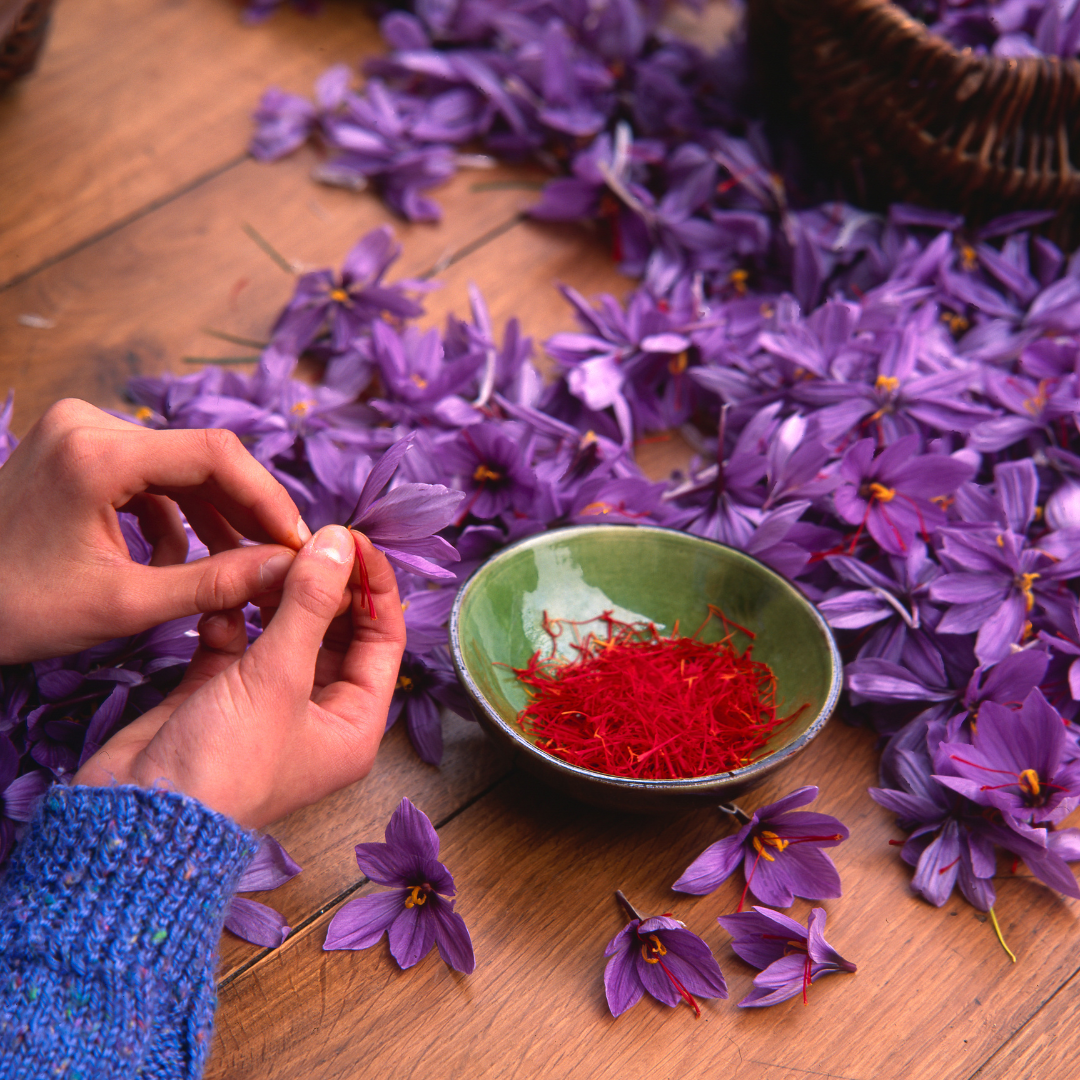
Saffron is considered a valuable and high-quality spice. It provides a unique coloring to dishes, which is why it is very popular among gourmets. However, its effects on the human psyche should not be underestimated. Find out now what makes this natural mood enhancer so special.

Saffron against depressive moods
Studies have shown that saffron has positive effects on the psyche. It is even considered a natural mood enhancer. So, the spice is just the thing for depressive moods and other psychological complaints.
In two pilot studies, saffron was compared with the antidepressants imipramine and fluoxetine. Surprisingly, there were hardly any differences in effectiveness. Subjects who took saffron extract in the form of capsules over a certain period of time showed an improved mood.
Saffron is thus said to be able to combat depressive moods. But the spice can also help with tension, fatigue, and confusion. Saffron is also often used for anxiety and stress. Regular intake can also lead to an increase in energy.
Further effects of saffron
As with most medicinal plants, saffron does not only work in one way. In addition to its mood-lifting and balancing effect, the spice also has some effects on the body. Not without reason, it is often used in both Ayurveda and Traditional Asian Medicine.
Saffron is said to be able to relieve sore and tired eyes, combat gastrointestinal complaints, and reduce head and neck pain. Saffron is also said to help with premenstrual complaints and menstrual pain.
Ingredients – this is how saffron is composed
Researchers have already thoroughly investigated the phytochemical composition of saffron. About 30% of the dry matter consists of crocine 1 to 5. These ingredients are responsible, among other things, for the characteristic coloring of saffron.
Another 15% of saffron consists of so-called Clucosid Picrocrocin. This is what causes the spicy but slightly bitter taste of saffron. Through a special chemical reaction, also known as deglucosylation, picrocrocin can be converted into volatile compounds such as safranal. These are considered typical flavor enhancers of the spice.
How saffron works in the body
The mood-lifting effect of saffron has been well researched. Therefore, it can also be well explained on a pharmacological level. Saffron causes an antagonistic effect of neurons at the NMDA receptor. This is based on the effects of the ingredient crocetin. The receptor is very important when it comes to mood: it is responsible for long-term changes in nerve connections. Since an interaction with a specific binding site of the receptor could be observed for crocetin, it is clear where the antidepressant effect comes from.
The effect on the gastrointestinal tract has also been well studied. The ingredients of saffron are not significantly altered in the stomach. Thus, they can reach the intestine and be absorbed there. This makes saffron a popular spice for healthy digestion.
Taking saffron – what you should know
The effect of medicinal plants can vary from person to person. Thus, no general statement can be made as to whether saffron helps with depression and anxiety in individual cases. However, research shows that the spice is quite capable of doing so. But how do you benefit from the ingredients?
Don't worry – you don't have to cook with the expensive spice every day to feel the positive effects of saffron. Saffron extract is now also available in dietary supplements. This makes it much easier to dose and take the active ingredient regularly.
FAQ – Frequently asked questions about saffron
Are there side effects of saffron?
At a normal dosage, no side effects occur. However, those who consume too much saffron may suffer from dizziness, drowsiness, and nausea. Dietary supplements therefore contain only as much saffron as is good for the body.
How quickly does saffron work for depression?
How quickly the mood-lifting effect of saffron shows can vary. In the study, a result was visible in about 6 weeks.
Can I take saffron permanently?
At the correct dose, you can take saffron over a longer period of time.