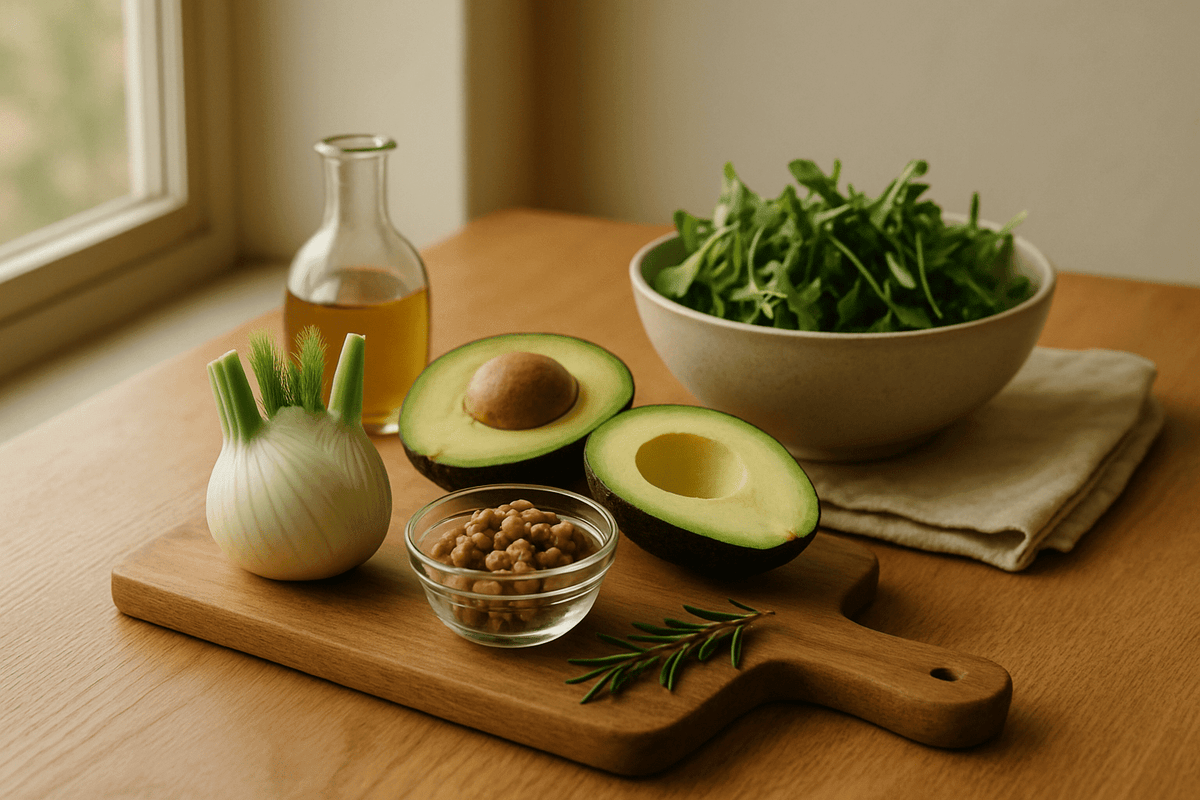




Winter is behind you. Heavier meals, less daylight, a bit more wine during the holidays — and suddenly your body feels sluggish. The organ most affected by this winter indulgence works silently in the background: your liver.

In Ayurvedic tradition, spring has been considered the time for cleansing for centuries. Not as a radical cure, not as a month of fasting — but as a gentle tap on the shoulder for an organ that has worked hard all winter. This 14-day plan shows you how to naturally support your liver. Without detox tea hype, without empty promises. With rest, structure, and what has worked for generations.
Why your liver deserves special attention after winter
The liver is the largest internal organ in the human body and performs over 500 biochemical tasks daily. It filters toxins from the blood, metabolizes alcohol, medications, and environmental toxins, stores nutrients, and produces bile for fat digestion. In winter, this includes: heavy, fat-rich foods, less exercise, often more alcohol during Christmas parties and New Year's Eve, and in some cases, longer medication intake due to colds.
The good news: The liver is one of the most regenerative organs in the human body. It recovers — if given the chance. This is precisely where the Ayurvedic spring approach comes in.
What does "liver detox" actually mean?
In a medical sense, the liver cannot be "detoxified" — it IS the detoxification organ. What the term means is something else: to support the liver in its natural work by reducing its burden (less alcohol, fewer processed foods) and promoting its regeneration (sufficient sleep, bitter substances, certain plants). This is exactly what this plan is about.
7 signs your liver needs a break
An overloaded liver rarely sends direct signals — it reports indirectly. These seven signs are common and should be taken seriously:
- Persistent fatigue, even after sufficient sleep
- Pale or yellowish complexion, especially in the morning
- Digestive problems after fatty or sweet foods
- Feeling of pressure in the upper right abdomen
- Dark urine despite adequate fluid intake
- Skin impurities or itching without an apparent cause
- Memory weakness or diffuse concentration problems
Important: These symptoms can have many causes. Anyone who persistently experiences several of them should seek medical advice. A gentle 14-day plan is a preventive measure — not a substitute for medical clarification of actual complaints.
The three principles of the gentle 14-day plan
Before diving into the specific daily structures, here's the foundation. Without these three principles, any detox plan will be a flash in the pan.
Principle 1: Relief before cleansing
Most people start detox cures with herbs, supplements, and teas — and thereby ignore what burdens their liver most. The Ayurvedic approach reverses this: First, what stresses the liver is reduced (alcohol, sugar, processed fats, late eating). Only then are supportive plants added. This sounds unspectacular — but that's exactly what makes the difference between a short-term effect and true regeneration.
Principle 2: Bitter substances instead of empty promises
Bitter substances have almost disappeared from our modern diet — and that's no coincidence. The food industry has systematically bred out bitter taste because it's not conducive to sales. For the liver, however, bitter substances are essential: they activate bile flow, stimulate metabolism, and support the digestion of fatty meals. Any reputable liver plan incorporates bitter substances daily — through arugula, chicory, dandelion, artichoke, or concentrated herbal preparations.

Classic bitter-tasting plants in Ayurvedic liver tradition: Arugula, chicory, dandelion, artichoke, and turmeric.
Principle 3: Patience instead of shock treatment
The liver regenerates over weeks, not days. Radical fasting cures can improve values in the short term — but often at the expense of other systems (adrenal glands, thyroid, gut flora). Fourteen days is a meaningful period because the body has enough time to adjust to new rhythms without getting stressed.
Your 14-day plan at a glance
The plan is divided into two phases. No perfection needed — 80% implementation is enough for noticeable effects.
Week 1 — Gentle start (Days 1–7)
Morning (immediately after waking up): A glass of lukewarm water with the juice of half a lemon and a thin slice of fresh ginger. Drink slowly. No solid food for the first 30 minutes.
Late morning: A breakfast based on cooked grains (oatmeal, millet, basmati rice) with some cinnamon and a handful of berries. No sugar, no white flour, no industrial products.
Lunch (main meal of the day): Cooked vegetables with bitter components — chicory, arugula, dandelion, artichoke — and a light protein source (legumes, fish, organic chicken). In Ayurvedic tradition, lunch is the main meal because the digestive fire (Agni) is strongest then.
Afternoon: A warm herbal tea with nettle, dandelion, or artichoke leaves. No coffee after 2 PM.
Evening: Light, warm food no later than 7 PM. Vegetable soup, steamed vegetable bowl, nothing raw, nothing heavy. The body should not be busy with digestion at night — only with regeneration.
To avoid in Week 1: Alcohol, white flour, refined sugar, industrially processed foods, eating after 7 PM.
Week 2 — Active support (Days 8–14)
All habits from Week 1 remain. Additionally:
- Daily exercise of 20–30 minutes outdoors, ideally in the morning. Even a walk is sufficient.
- Gentle liver massage in the evening: gently massage in circles clockwise with warm oil (sesame or almond) under the right rib cage.
- Introduction of herbal support to promote natural liver function.
When gentle natural support can help
Most people manage the dietary changes surprisingly well — and underestimate how significant this step alone is. If you want to specifically give something back to your liver in the second week, Ayurvedic tradition suggests herbal tonics. Classic liver herbs include milk thistle, turmeric, Amla, and Bhumi Amla.
Our vedi ex formulation combines precisely these plants in a well-thought-out combination that supports the liver's natural regeneration process — without being aggressive. It doesn't replace any of the habits from the 14-day plan; it complements them. The Ayurvedic logic behind it: First, correct the lifestyle, then supplement with herbs. Never the other way around.
The most common mistakes in liver detoxification
From over 2000 years of Ayurvedic experience and current research, some typical pitfalls can be summarized well:
Mistake 1: Starting too radically. Anyone who goes from 10 cups of coffee to zero on the first day will end up with a headache on the couch and quit after three days. Reduce gradually.
Mistake 2: Treating the liver as an isolated organ. Liver, gallbladder, and intestines work as a system. Anyone who only wants to "cleanse" the liver but ignores the intestines loses at least half the potential.
Mistake 3: Seeing detox teas as a miracle cure. Most detox teas contain laxatives (e.g., senna leaves). This may temporarily reduce weight, but it has nothing to do with liver detoxification and can be harmful with prolonged use.
Mistake 4: Underestimating sleep. The liver does its most intensive regeneration work between 1 and 3 AM. Anyone who goes to bed at midnight and wakes up at 6 AM cuts off precisely this window.
Mistake 5: Forgetting water. All metabolic waste products from the liver must be excreted via the kidneys. Without sufficient water (1.5–2.5 liters daily, depending on body weight), much of it ends up back in the bloodstream.
How long does liver regeneration really take?

Regeneration needs rest. The most intensive liver work happens at night — and in relaxed moments like this.
A legitimate question — and one with multiple answers. On a cellular level, the liver replaces damaged cells within a few weeks to months. The first noticeable effects of a gentle 14-day plan — better morning energy, clearer skin, more stable digestion — usually appear between day 7 and day 14. Deeper changes (liver values in blood, fat deposits) require 6 weeks to 6 months of continuous support.
Anyone who regularly implements a 14-day plan — about twice a year, in spring and autumn — works in a rhythm that aligns with both Ayurvedic tradition and modern insights into regeneration cycles.
Liver detoxification in Germany, Austria, and Switzerland
The DACH region has a particularly strong tradition in natural liver care. In Germany — especially in cities like Munich, Berlin, and Hamburg — the topic of liver health has gained attention as part of the general detox wave for years, often in connection with fasting cures according to Buchinger or Hildegard von Bingen. In Austria, particularly in the Vienna and Salzburg areas, there is a long tradition of Ayurvedic cure centers that offer spring cleanses as a fixed program item. Switzerland — with centers in Zurich, Basel, and Geneva — has a very sophisticated pharmacy landscape with high-quality standards for herbal liver preparations.
What applies to all three regions: The classic spring season from March to May is climatically ideal for cleansing cures. The body emerges from the heaviness of winter, the days get longer, and fresh seasonal herbs and vegetables are available. A conscious liver plan fits this natural rhythm.
Frequently asked questions about liver detoxification
Can I do the plan even if I don't drink alcohol?
Yes. Alcohol is just one of many factors that burden the liver. Processed foods, sugar, medications, and chronic stress also have an effect. Even abstinent people benefit from a conscious liver break.
Do I have to completely give up coffee during the 14 days?
No, but reduce it. One cup in the morning, before 2 PM, is fine. More important than total abstinence is consistent reduction. If you can't function without coffee, you should approach the plan gradually.
Can I exercise during the plan?
Yes, moderate exercise is even beneficial. Intensive exertion (HIIT, strength training at the limit) should be reduced in Phase 1 because the body needs energy for internal regeneration. Walks, gentle yoga, swimming are ideal.
How often a year can I do the plan?
Recommended twice a year — in spring and autumn. More often is not necessary and can excessively burden the body if it is seen as a permanent state.
Are supplements like vedi ex mandatory for the success of the plan?
No. The plan also works purely through diet and lifestyle. Herbal support can enhance the effect and accelerate the second phase — but it never replaces the cornerstones of sleep, nutrition, and exercise.
One last thought
Winter has been long, and your liver has worked hard. Giving it fourteen days of attention now is not a sacrifice — it is one of the kindest decisions you can make for your body. You don't have to do everything perfectly. You just have to start.
If you notice after the first week that you are looking for additional support, that is the moment when vedi ex fits well — with Ayurvedically selected plants traditionally used for liver support. Not a miracle cure. Simply a well-thought-out addition to a plan that is effective in itself.
Your spring begins now.