




Gourmet Trio
Your all-round set for lightness, balance, and detox – perfect after any celebration.
- 100% natürliche Inhaltsstoffe
- Streng laborgeprüft
 Altbewährte Pflanzenkunde¹ zur Unterstützung bei körperlicher Anstrengung²
- Ayurvedische Rezeptur mit ausgewählten Pflanzenextrakten – perfekt für Genuss-Abende
- Vegan, rein & pflanzlich
- Hochdosierte Inhaltsstoffe
 Von Experten*innen in der Schweiz entwickelt

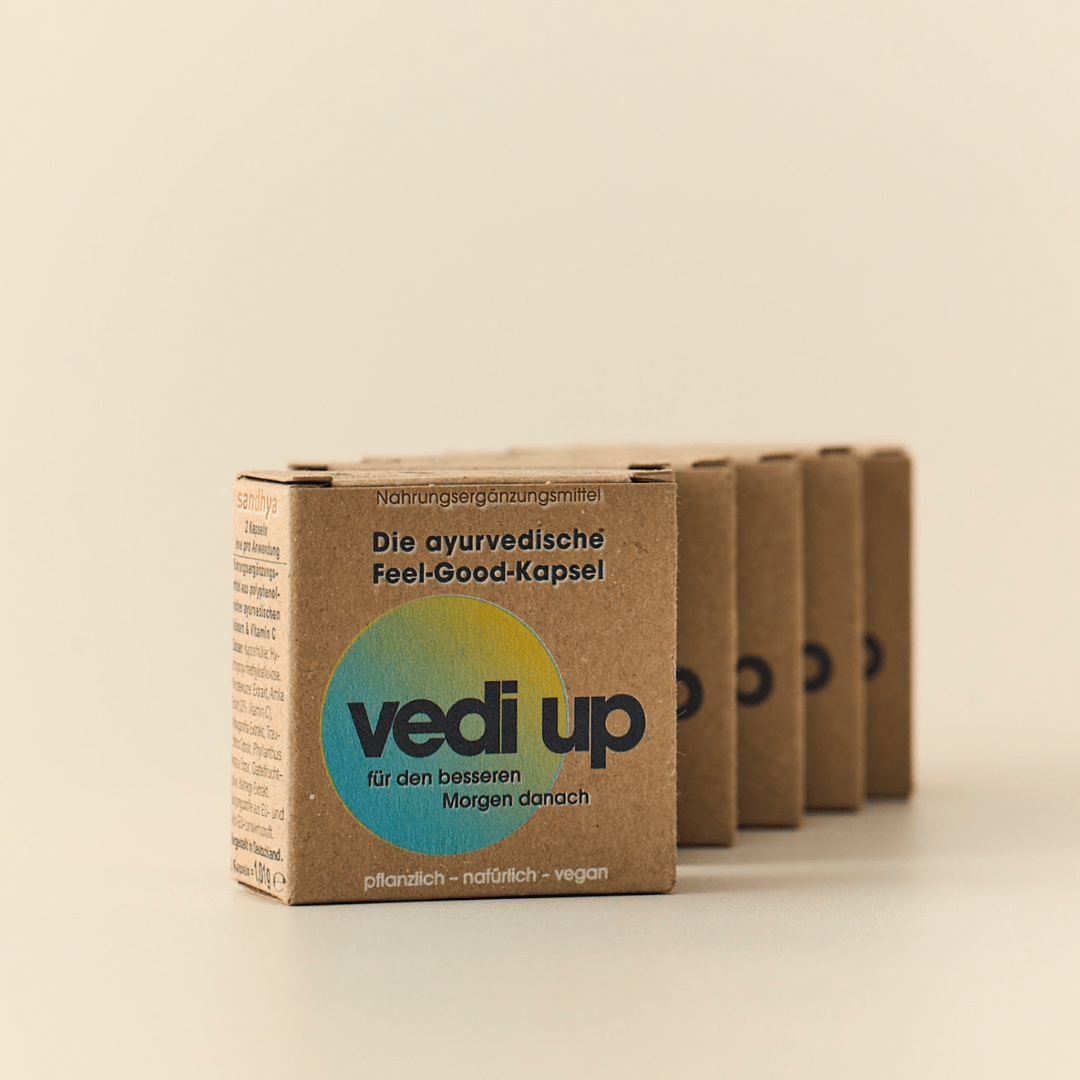
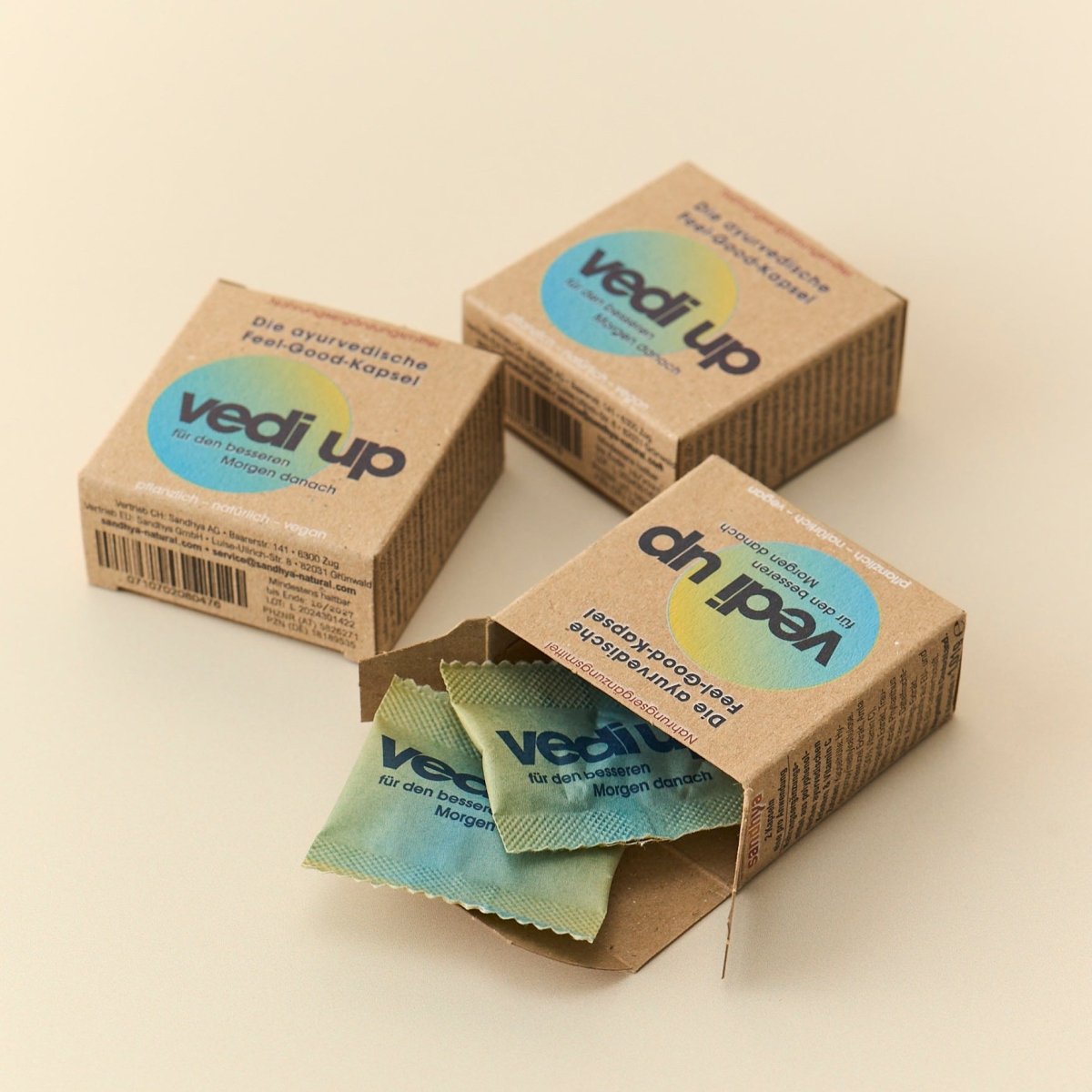
Die vedi up Kapsel aus 7 ayurvedischen Pflanzenextrakten und natürlichem Vitamin C:
Chicoréewurzel Extrakt, Amla Extrakt (30% Vitamin C), Ashwagandha Extrakt, Traubenkern Extrakt, Phyllanthus Amarus Extrakt, Dattelfruchtpulver, Kalmegh Extrakt, Kapselhülle: Hydroxypropylmethylcellulose (vegan)
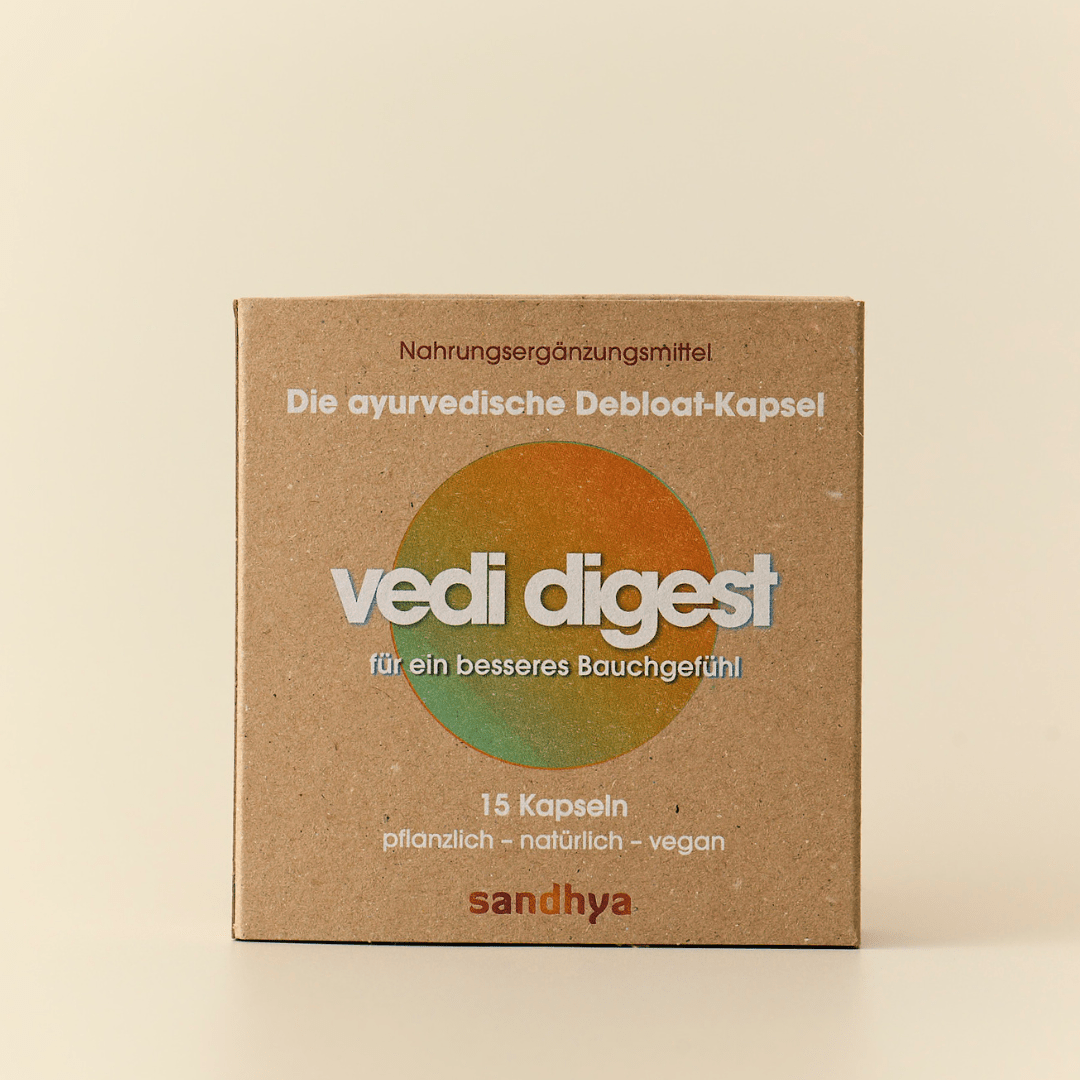
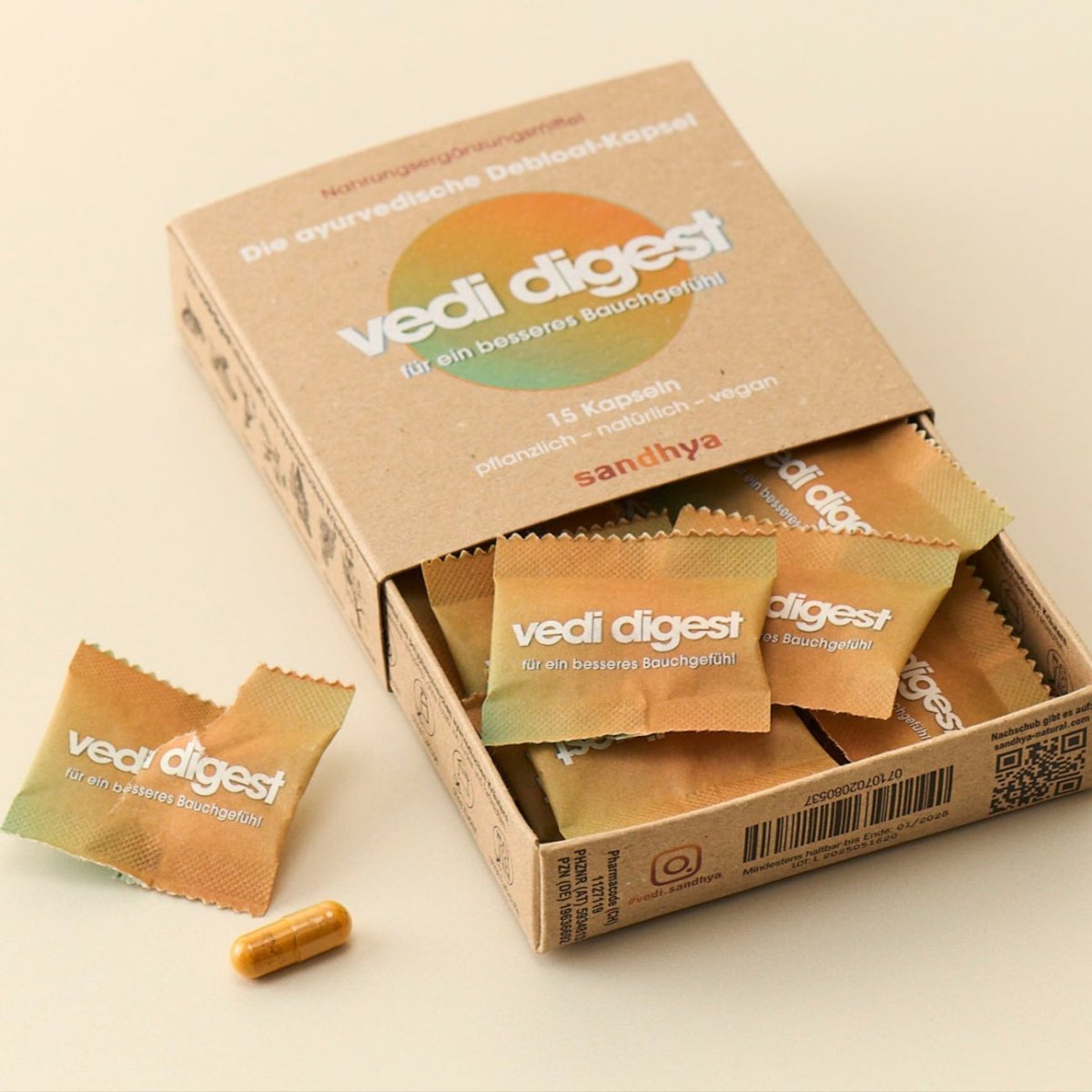
Die vedi digest Debloat-Kapsel aus 7 ayurvedischen Pflanzenextrakten:
Zutaten: Curcuma Extrakt, Enzianwurzel Extrakt 10:1, Ingwer Extrakt, Kardamom Extrakt, Bitterkleeblatt Extrakt, Galangalwurzel Extrakt, Wermutkraut Extrakt, Hydroxypropylmethylcellulose (Kapselhülle).
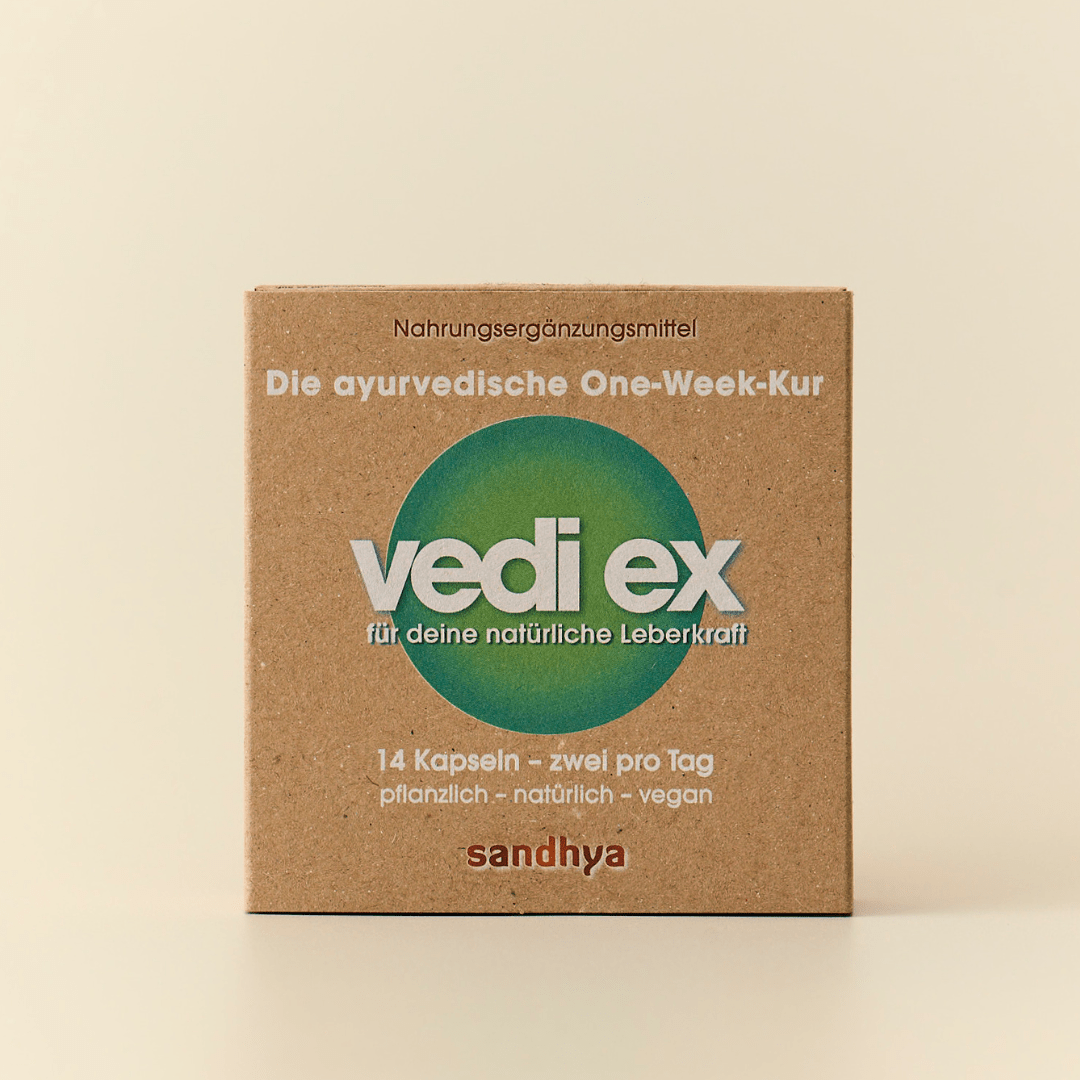
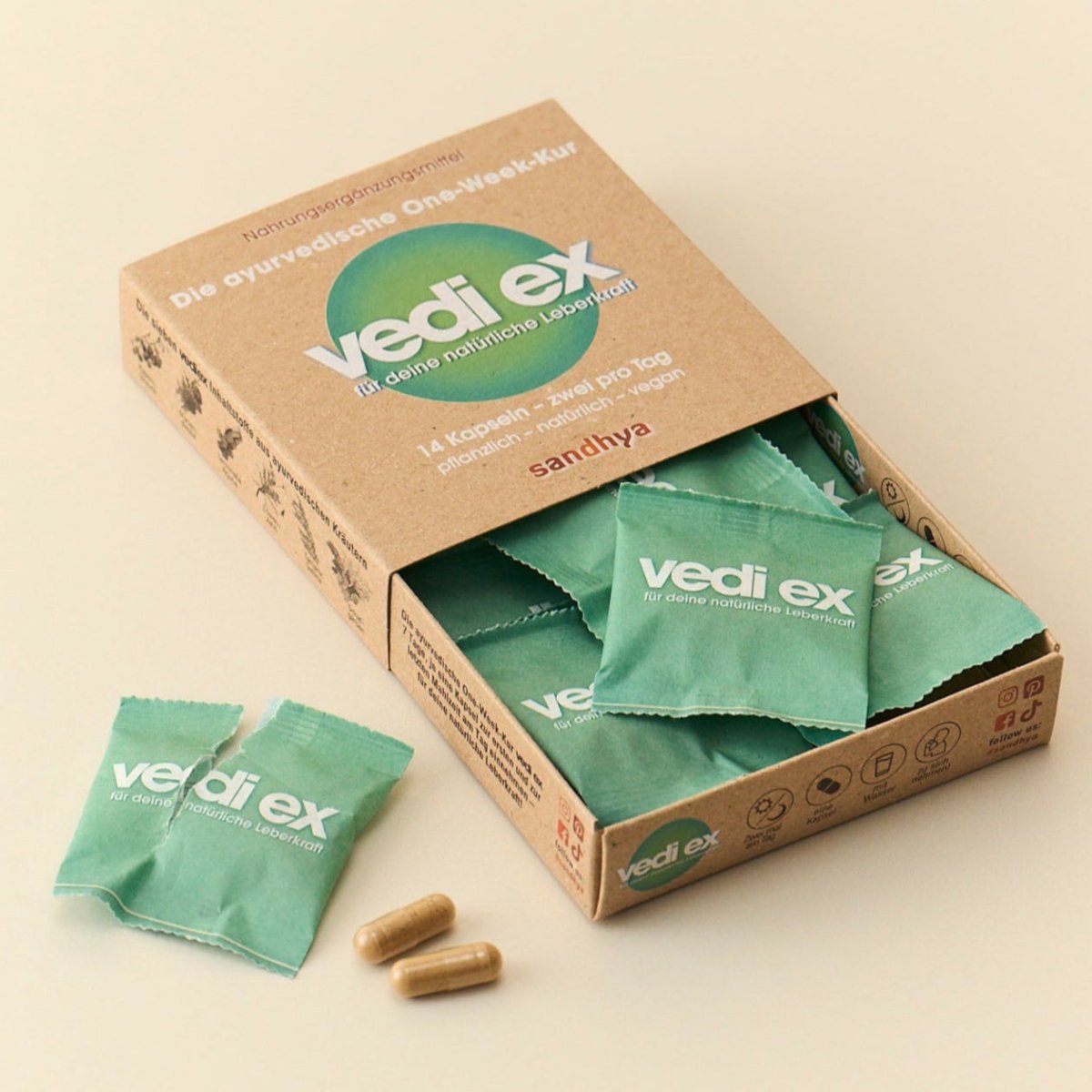
Die vedi ex One-Week-Kur aus 6 ayurvedischen Pflanzenextrakten:
Zutaten: Kapernstrauch Extrakt (Campari spinosa), Mariendistel Extrakt, Terminalia
arjuna Extrakt, Löwenzahn Extrakt 4:1, Französische Tamariske Extrakt (Tamarix
gallica), Schafgarben Extrakt, Reisextrakt. Kapselhülle: Hydroxypropylmethylcellulose (vegan).
Häufig gestellte Fragen zu vedi up:
Wann und wie wird vedi up angewendet?
vedi up wird idealerweise vor oder während körperlich oder mental fordernder Phasen eingenommen – z. B. bei Stress, nach einem schweren Essen oder an langen Tagen. Eine Kapsel am Abend genügt in der Regel. Bei Bedarf kannst du auch tagsüber eine zweite Kapsel ergänzen.
Was macht vedi up so außergewöhnlich?
Unsere Kapseln enthalten eine einzigartige ayurvedische Rezeptur, entwickelt von Experten. Sie kombinieren kostbare Pflanzenextrakte mit einem hohen Anteil an natürlichen Bitterstoffen, Vitaminen und Mineralstoffen. In der ayurvedischen Lehre werden diese Inhaltsstoffe traditionell zur Stärkung der Leberfunktion und zur inneren Balance eingesetzt.
Gibt es nicht genügend Bitterstoffe in unserer Ernährung?
Leider nicht. In der modernen Ernährung wurden Bitterstoffe nach und nach verdrängt – weil sie als „zu bitter“ empfunden wurden. Dabei sind sie wertvoll für Verdauung, Stoffwechsel und Balance.
Häufig gestellte Fragen zu vedi digest:
Wann und wie wird vedi digest angewendet?
vedi digest kann je nach Bedarf täglich eingenommen werden. Die empfohlene Dosierung liegt bei 1–2 Kapseln pro Tag, entweder vor oder nach einer Mahlzeit. So kann die Verdauung optimal unterstützt und Blähungen sowie Völlegefühl entgegengewirkt werden.
Was macht vedi digest so außergewöhnlich?
Die einzigartige ayurvedische Rezeptur! vedi digest kombiniert wertvolle Pflanzenextrakte wie Curcuma, Enzianwurzel, Ingwer und Kardamom, die traditionell zur Unterstützung der Verdauung eingesetzt werden. Bitterkleeblatt, Galangalwurzel und Wermutkraut helfen bei Völlegefühl und unterstützen eine harmonische Verdauung nach dem Essen. Diese Kombination macht vedi digest zur idealen pflanzlichen Unterstützung für ein leichtes Bauchgefühl.
Wie schnell tritt die Wirkung ein?
Die Wirkung ist individuell und hängt von Deinem Körper ab. Bitterstoffe und verdauungsfördernde Pflanzenstoffe entfalten ihre Wirkung in der Regel bereits während der Verdauung. Viele Anwender:innen berichten, dass sie sich nach der Einnahme von vedi digest spürbar leichter fühlen – besonders nach üppigen Mahlzeiten.
Weitere Fragen?
Du kannst uns jederzeit schreiben über service@sandhya-natural.com.
Verzehrempfehlung vedi up: Bei Bedarf eine Kapsel (max. Dosis) mit einem
Glas Wasser einnehmen.
Verzehrempfehlung vedi digest: Bei Bedarf 1–2 Kapseln, vor oder nach einer Mahlzeit mit ausreichend Wasser einnehmen.
Verzehrempfehlung vedi ex: Bei Bedarf sieben Tage, täglich zwei Kapseln (max. Dosis) zur der ersten und letzten Mahlzeit mit einem Glas Wasser einnehmen. Wir empfehlen in der Woche der Einnahme auf Zucker und Alkohol komplett zu verzichten.
Lagerhinweis: Geschlossen, kühl
(bei +4° bis +25° C) und trocken lagern.
Wichtige Hinweise: Nur für den Verzehr durch Erwachsene geeignet. Nicht für schwangere und stillende Frauen geeignet. Außerhalb der Reichweite von kleinen Kindern lagern. Die angegebene empfohlene tägliche Verkehrsmenge darf nicht überschritten werden. Nahrungsergänzungsmittel sollten nicht als Ersatz für eine ausgewogene und abwechslungsreiche Ernährung verwendet werden.
Deine gesetzlichen Gewährleistungsrechte

Weitere Informationen: europa.eu/youreurope/garantien
Die ayurvedische Lehre blickt auf jahrtausendealtes Wissen zurück, das auch heute noch von großer Bedeutung ist. Zu den in Vedi Up enthaltenen Pflanzenextrakten gibt es zahlreiche Studien in der modernen Phytotherapie.
Aufgrund gesetzlicher Vorgaben dürfen wir jedoch keine konkreten gesundheitsbezogenen Aussagen zu den Inhaltsstoffen machen. Wir setzen daher auf größtmögliche Transparenz und verweisen auf aktuelle Studien und Quellen, die du selbst recherchieren kannst. Vielen Dank für dein Verständnis.
Antioxidative Unterstützung - Traubenkernextrakt:
Bagchi, Debasis, et al. (2000): "Free radicals and grape seed proanthocyanidin extract: importance in human health and disease prevention."
Link zur Studie
Park, Eunyoung, et al. (2016): "Effects of grape seed extract beverage on blood pressure and metabolic indices in individuals with pre-hypertension."
Link zur Studie
Feringa, Harm HH, et al. (2011): "The effect of grape seed extract on cardiovascular risk markers: a meta-analysis of randomized controlled trials."
Link zur Studie
Preuss, Harry G., et al. (2000): "Effects of niacin-bound chromium and grape seed proanthocyanidin extract on the lipid profile of hypercholesterolemic subjects: a pilot study."
Link zur Studie
Stressabbau und Vitalitätssteigerung - Ashwagandha
Chandrasekhar, K., et al. (2012): "A prospective, randomized double-blind, placebo-controlled study of safety and efficacy of a high-concentration full-spectrum extract of ashwagandha root in reducing stress and anxiety in adults."
Link zur Studie
Salve, Jaysingh, et al. (2019): "Adaptogenic and Anxiolytic Effects of Ashwagandha Root Extract in Healthy Adults: A Double-blind, Randomized, Placebo-controlled Clinical Study."
Link zur Studie
Langade, Deepak, et al. (2019): "Efficacy and Safety of Ashwagandha (Withania somnifera) Root Extract in Insomnia and Anxiety: A Double-blind, Randomized, Placebo-controlled Study."
Link zur Studie
Lopresti, Adrian L., et al. (2019): "An investigation into the stress-relieving and pharmacological actions of an ashwagandha (Withania somnifera) extract: A randomized, double-blind, placebo-controlled study."
Link zur Studie
Lopresti, Adrian L., et al. (2019): "A Randomized, Double-Blind, Placebo-Controlled, Crossover Study Examining the Hormonal and Vitality Effects of Ashwagandha (Withania somnifera) in Aging, Overweight Males."
Link zur Studie
Coles, Terrence B., et al. (2009): "Naturopathic care for anxiety: a randomized controlled trial ISRCTN78958974."
Link zur Studie
Immununterstützung - Kalmegh Kraut:
Thamlikitkul, V., et al. (1991): "Use of visual analogue scale measurements (VAS) to asses the effectiveness of standardized Andrographis paniculata extract SHA-10 in reducing the symptoms of common cold. A randomized double blind-placebo study."
Link zur Studie
Nährstoffsupport und antioxidativ - Dattelfruchtpulver:
Al-Farsi, M., et al. (2019). "Development and Evaluation of Date Bars for Iron Bioavailability in Iron-Deficient Rats." Foods, 8(8), 297.
Link zur Studie
Tang, Z.-X., et al. (2022). "Date fruit (Phoenix dactylifera L.) intake reduces the blood lipid levels in humans: a systematic review and meta-analysis." Nutrition & Metabolism, 19, 45.
Link zur Studie
Al Alawi, A., et al. (2022). "Phoenix dactylifera L. (date palm) fruits as a potential cardioprotective agent: the richness of phytochemicals and a review of their beneficial effects on cardiovascular health." Journal of the Saudi Society of Agricultural Sciences, 21(5), 287-297.
Link zur Studie
Stoffwechsel- und antioxidative Unterstützung- Amla Frucht:
Akhtar, M. S., et al. (2011). "Effect of Amla fruit (Emblica officinalis Gaertn.) on blood glucose and lipid profile of normal subjects and type 2 diabetic patients." International Journal of Food Sciences and Nutrition, 62(6), 609-616.
Link zur Studie
Yokozawa, T., et al. (2010). "Amla (Emblica officinalis Gaertn.) attenuates age-related renal dysfunction by oxidative stress." Journal of Agricultural and Food Chemistry, 58(18), 9792-9798.
Link zur Studie
Baliga, M. S., et al. (2022). "The Health Benefits of the Ayurvedic Anti-Aging Drugs (Rasayanas): An Evidence-Based Revisit." Journal of Ethnopharmacology, 282, 114646. Link zur Studie
Usharani, P., et al. (2015). "Effects of Phyllanthus emblica extract on endothelial dysfunction and biomarkers of oxidative stress in patients with type 2 diabetes mellitus: a randomized, double-blind, controlled study." Diabetes, Metabolic Syndrome and Obesity: Targets and Therapy, 8, 275-284.
Link zur Studie
Suryanarayana, P., et al. (2021). "Emblica officinalis (Amla) ameliorates high-fat diet-induced alterations in mitochondrial enzymes and reduces visceral fat in rats." Phytotherapy Research, 35(10), 5687-5699.
Link zur Studie
Tara Shanbhag, et al. (2012). "Pharmacological actions of the aqueous extract of Emblica officinalis: a study on the isolated frog heart preparation." International Journal of Basic & Clinical Pharmacology, 1(2), 94-99. Link zur Studie
Leberschutz - Bittere Kreuzblume (Phyllantus Amarus):
Khatoon, S., et al. (2011). "Comparative pharmacognostic and phytochemical analysis of Phyllanthus species." Journal of Scientific and Industrial Research, 70, 887-896.
Link zur Studie
Bagalkotkar, G., et al. (2020). "Phytochemicals from Phyllanthus niruri Linn. and their pharmacological properties: a review." Journal of Pharmacy and Pharmacology, 58(12), 1559-1570. Link zur Studie
Raphael, T. J., et al. (2012). "Anti-diabetic activity of Phyllanthus amarus extract: an in vitro study." Journal of Health Science, 58(5), 497-502.
Link zur Studie
Patel, J. R., et al. (2016). "Phyllanthus amarus: Ethnomedicinal uses, phytochemistry and pharmacology: A review." Journal of Ethnopharmacology, 188, 5-16.
Link zur Studie
Verdauungsförderung - Chicorée Wurzel:
Nwafor, I. C., et al. (2019). "Prebiotic effects of inulin extracted from chicory (Cichorium intybus) root on the HCT116 human colon cancer cell line." Toxicology Reports, 6, 210-222.
Link zur Studie
Petrova, P., et al. (2022). "Inulin-type fructans from chicory (Cichorium intybus L.) root induce changes in the gut microbiota of healthy humans." Food Research International, 150, 110729.
Link zur Studie
Verdauungsförderung & Entzündungshemmung – Curcuma Extrakt (Curcuma longa):
Rajasekaran, Sigrid A. (2011): "Therapeutic potential of curcumin in
gastrointestinal diseases."
Link zur Studie
Dulbecco, Pietro, Savarino, Vincenzo (2014): "Therapeutic potential of curcumin
in digestive diseases."
Link zur Studie
Magenberuhigung & Übelkeitslinderung – Ingwer Extrakt (Zingiber officinale):
Hu, Ming-Luen, et al. (2011): "Effect of ginger on gastric motility and symptoms
of functional dyspepsia."
Link zur Studie
Aregawi, Lemlem Gebremariam, Gebremeskel, Teferi Gebru, Zoltan, Csiki.
(2024): "Preventive and therapeutic effects of ginger on bowel disease: A review
of clinical trials."
Link zur Studie
Darmgesundheit & Krampflösung – Galangalwurzel Extrakt (Alpinia galanga):
Hadjzadeh, M.-A.R., Ghanbari, H., Keshavarzi, Z., Tavakol-Afshari, J. (2014):
"The Effects of Aqueous Extract of Alpinia Galangal on Gastric Cancer Cells
(AGS) and L929 Cells in Vitro."
Link zur Studie
Wilson, L. (2016): "Spices and Flavoring Crops: Tubers and Roots."
Link zur Studie
Al-Snafi, A. E. (2014). "The Pharmacological Activities of Alpinia galangal - A
Review."
Link zur Studie
Stimulierung der Magensäfte & Verdauungshilfe – Wermutkraut Extrakt (Artemisia absinthium):
Boeing, T., de Souza, J., da Silva, R. de C. V., Mariano, L. N. B., da Silva, L. M.,
Gerhardt, G. M., Cretton, S., Klein-Junior, L. C., & de Souza, P. (2023).
"Gastroprotective effect ofArtemisia absinthiumL.: A medicinal plant used in
the treatment of digestive disorders."
Link zur Studie
Tobyn, G., Denham, A., & Whitelegg, M. (2011). "Artemisia absinthium,
wormwood. In Medical Herbs. "
Link zur Studie
Verdauungsanregung & Blähungsreduktion – Kardamom Extrakt (Elettaria cardamomum):
Yahyazadeh, R., Ghasemzadeh Rahbardar, M., Razavi, B. M., Karimi, G., &
Hosseinzadeh, H. (2022). "The effect of Elettaria cardamomum (cardamom) on
the metabolic syndrome: Narrative review. "
Link zur Studie
Singletary, K. (2021). "Cardamom: Potential health benefits. "
Link zur Studie
Leberunterstützung & Appetitanregung – Bitterkleeblatt Extrakt (Menyanthes trifoliata):
Rezaie, P., Bitarafan, V., Horowitz, M., & Feinle-Bisset, C. (2021). "Effects of
bitter substances on GI function, energy intake and glycaemia—Do preclinical
findings translate to outcomes in humans? "
Link zur Studie

vedi up wurde entwickelt, um deinen Körper in Momenten bewussten Genusses zu unterstützen – wenn das Essen etwas üppiger war oder du deinem Wohlbefinden etwas Gutes tun möchtest. Die pflanzliche Rezeptur begleitet die nächtliche Regeneration sanft und gezielt.
Eine Kapsel am Abend genügt, damit du am nächsten Tag im Gleichgewicht bleibst. vedi digest ist das perfekte Pendant – bei üppigen Speise unterstützt es effektiv mit Anti-Blähbauch-Effekt.
Wusstest Du, dass die Verdauung eine zentrale Rolle für Dein Wohlbefinden spielt? Sie ist nicht nur für die Nährstoffaufnahme zuständig, sondern auch für die Energieversorgung, das Immunsystem und das hormonelle Gleichgewicht.
Ein gut funktionierendes Verdauungssystem sorgt dafür, dass Nährstoffe optimal verwertet und Schadstoffe effizient ausgeschieden werden. Deshalb ist es wichtig, die Verdauung bewusst zu unterstützen – für mehr Leichtigkeit und ein gutes Bauchgefühl.
Manchmal fühlt sich der Alltag nach Genussmomenten oder intensiven Tagen einfach ein wenig schwerer an. Genau dann ist es Zeit, dir selbst etwas Gutes zu tun.
vedi ex ist unsere ayurvedisch inspirierte 7-Tage-Kur mit sorgfältig ausgewählten Pflanzenextrakten. Die Rezeptur basiert auf traditionellen Anwendungen und unterstützt dich dabei, bewusst zu entschleunigen, Ballast hinter dir zu lassen und mit mehr Leichtigkeit in deine Routinen zurückzufinden.
100% PFLANZENKRAFT
Key-Inhaltsstoffe
Die sorgfältig abgestimmte Zusammensetzung aus kraftvollen Pflanzenextrakten machen dieses Power-Bundle zur idealen Begleitung für genussvolle Abende und üppiges Essen.
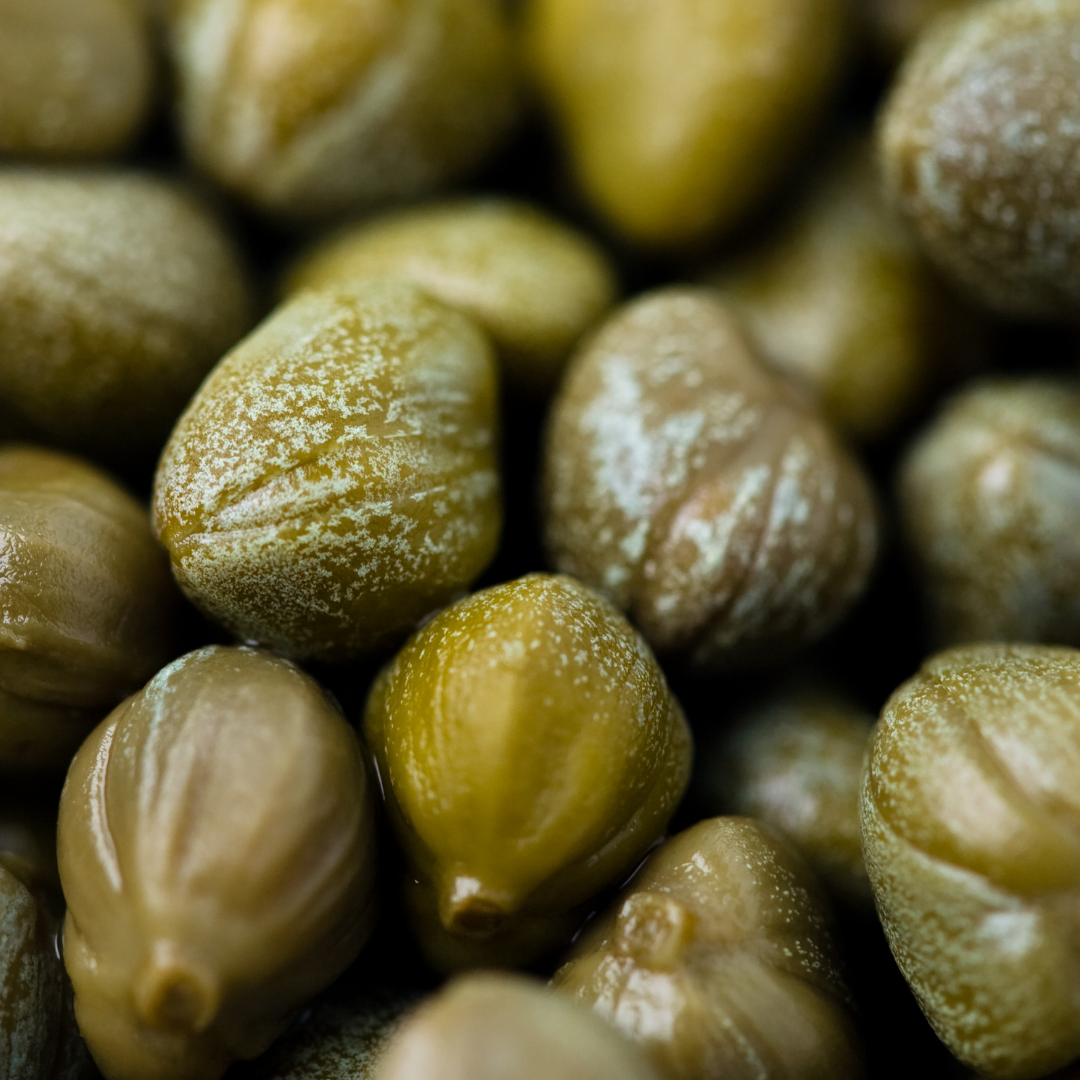
Kapernstrauch unterstützt die Leberfunktion*

Amla Frucht mit Vitamin C hat antioxidative Eigenschaften*

Galangal wird traditionell für die Verdauung verwendet*

Kurkuma trägt zur normalen Leberfunktion und Verdauung bei*
Anderes Produkt gefällig?
Bundles & mehr